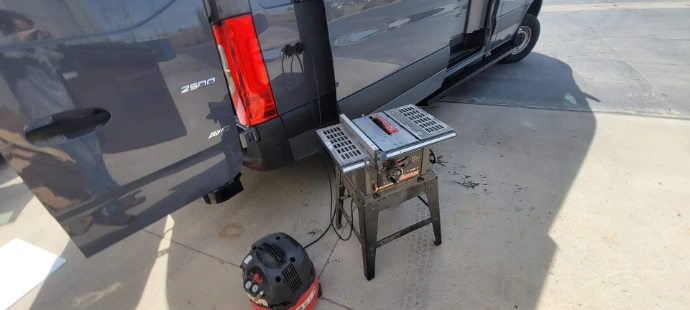
These systems are built as complete electrical setups for work vehicles, not add-ons or standalone components. Every build is designed around how the vehicle is used, what it needs to run, and how power is being consumed throughout the day.
Below are the main components we use and how each part fits into a complete system.
Lithium Battery Systems
We use lithium iron phosphate (LiFePO₄) batteries because they outperform traditional lead-acid setups in almost every way.
Compared to lead-acid, lithium gives you:
- More usable power
- Faster charging
- Longer lifespan (5+ years in most applications)
- Stable voltage under load
- No maintenance
For commercial use, that means more runtime in a smaller footprint and fewer headaches over time. We size battery banks based on real power needs, not guesswork.
Victron Energy Inverters and Components
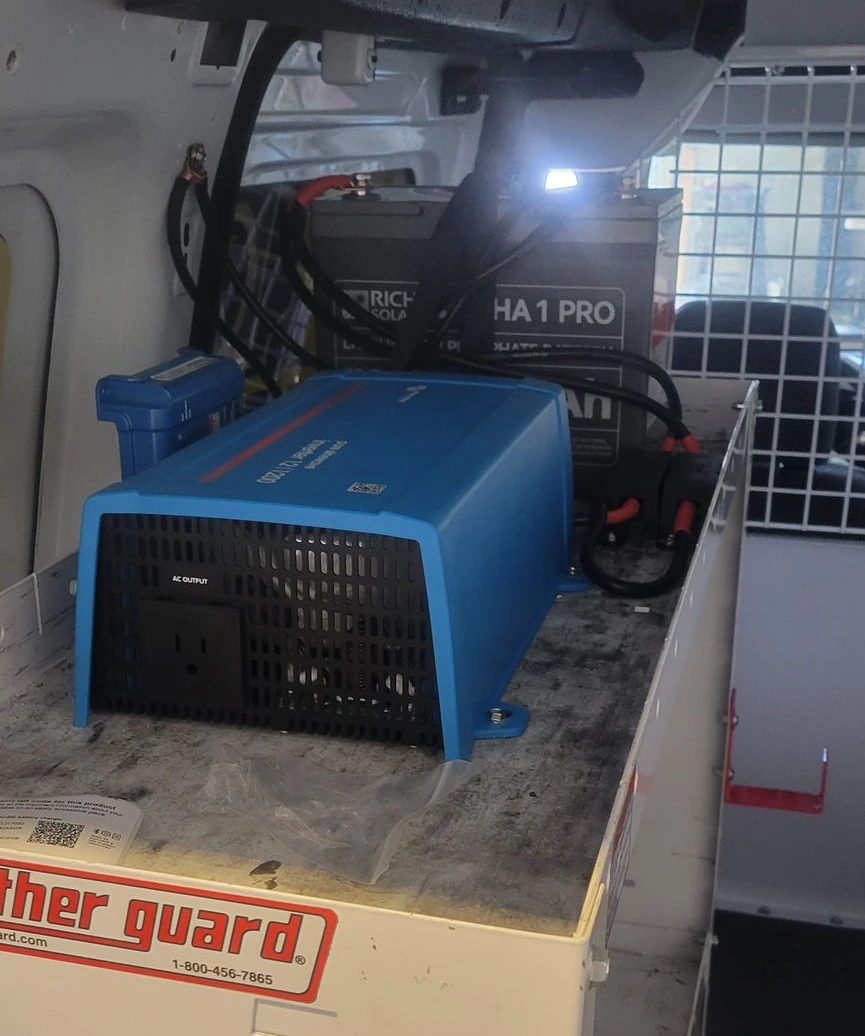
We use Victron because it holds up in work environments.
Victron inverters turn battery power into clean 120V power for tools, chargers, and onboard equipment. Systems can be set up with multiple outlets and expanded later if needed.
They also give you system monitoring so you can see battery status, charging, and power use in real time.
Charging and Power Management
Every system is built around how the vehicle actually operates.
Charging options include:
- Alternator charging while driving
- Shore power at a shop or yard
- Solar when it makes sense
- Generator input when higher demand requires it
Power management equipment keeps everything charging safely and prevents overloading or damaging components.
We design each system around how much power you use, how long the vehicle runs each day, and how often it sits.
Generator Integration
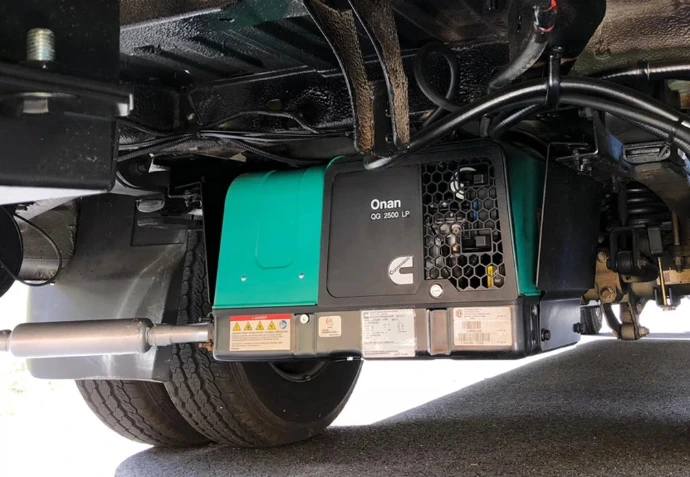
For higher-demand setups, a generator can be added to extend runtime and support continuous heavy loads.
Generators are typically mounted under the vehicle so they don’t take up interior space.
Fuel systems can be tied into the vehicle tank so the generator runs off the same fuel supply.
The fuel pickup is designed to leave a reserve in the tank so the vehicle still has enough range to get to a fuel station.
When paired with a properly sized battery system, this creates a flexible setup that runs quietly when it can and switches to generator power when it has to.
Crew Productivity and Comfort
Onboard power improves how crews work, not just what tools they can run.
Systems can support:
- Tool charging stations
- Refrigeration and food storage
- Idle-free air conditioning
- Microwaves and small appliances
- Device charging and mobile workstations
- Connectivity gear like Starlink or signal boosters
- Power tools like saws, compressors, and threaders
This cuts downtime during the day and keeps crews working on site instead of leaving for breaks or power.
Built for Real Work Conditions
We don’t design systems on paper.
We design them around real loads, real environments, and real use over time.
That means accounting for how the vehicle is actually used and leaving room for future expansion if needed.
The end result is a system that works day after day in commercial conditions.
Schedule a Consultation
If your vehicles need reliable onboard power, we can design a system that fits your equipment and how you work.
Fill out the form below and we’ll get you options and pricing.