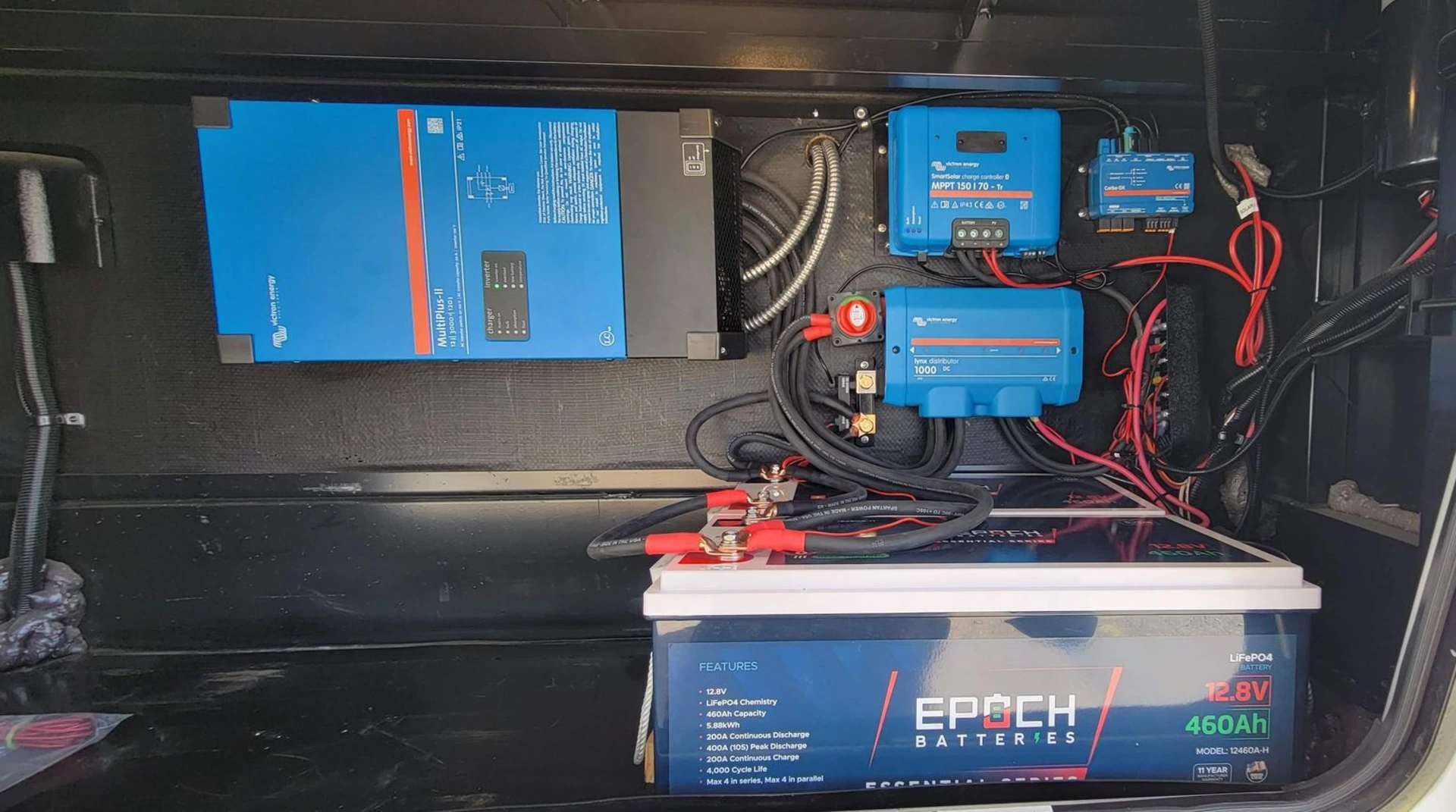
One of the very first questions you should ask when considering off-grid RV living is: What lifestyle do you want? What appliances do you need to work when you are off grid? Will you need internet? Do you need air conditioning? A heater? A hair dryer? The list goes on and on. The answers to these questions will primarily determine whether you need an inverter installed to power these appliances using battery power alone. They will also help you determine how large your battery bank should be.
In this article, we will show you how to consider power coming in, battery storage capacity, and power going out in order to calculate a power system based on your needs and the lifestyle you choose.
Inverter
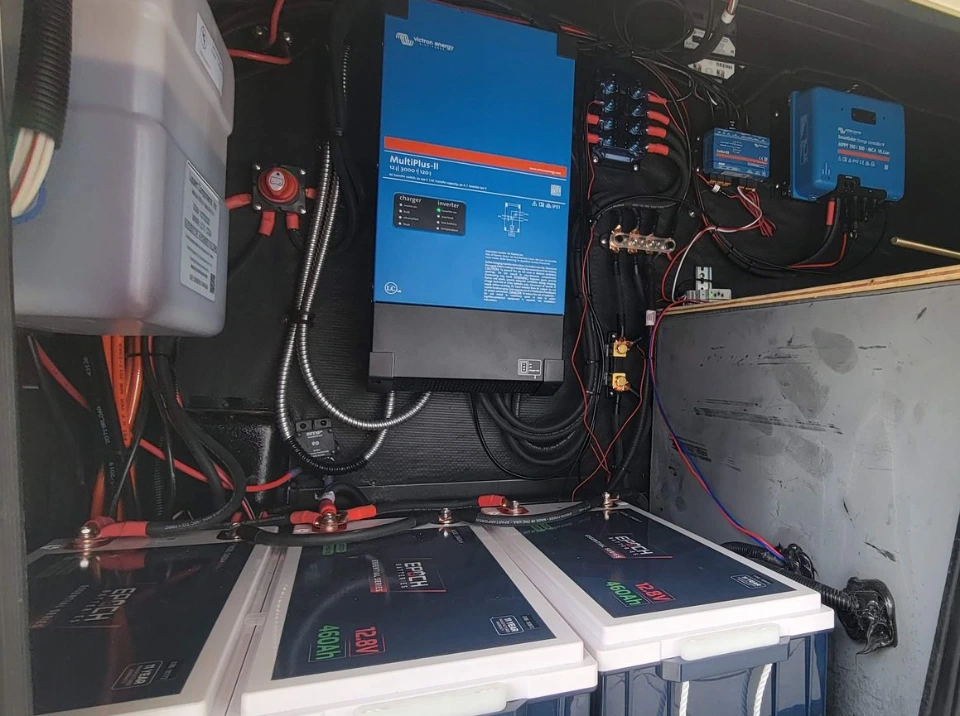
If the lifestyle you choose requires using any items in your RV that run off a standard outlet or 110V power, you will need an inverter. An inverter takes the DC power from your battery bank and converts it to AC power so you can use the features, outlets, and appliances in your RV that normally only work when plugged into shore power or when using a generator. How many of these appliances you want to use at the same time is another important factor that determines how large an inverter you need. That topic can be addressed in another article. For now, let’s assume that you do need an inverter.
Battery Bank
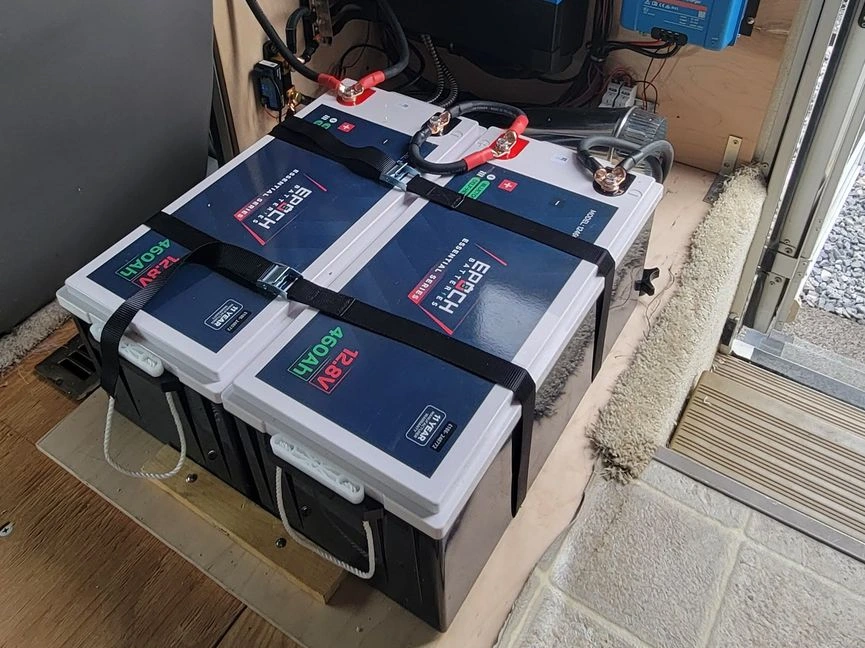
Once you have decided which appliances you intend to use off grid, you can determine the specifications of your battery bank. LiFePO4 batteries are commonly used in RVs and offer many advantages compared to lead-acid batteries. We highly recommend RVers switch to LiFePO4 batteries if they haven’t already. For this discussion and these examples, we will assume LiFePO4 batteries are being used.
Battery sizes are given in amp-hours (Ah). This is a measurement of how long a battery can be used based on a certain current draw. For example, a 100Ah battery could be used for two hours if the current draw is 50 amps. At 25 amps, it could run for four hours, and so on. Another important thing to note is that batteries can be combined to create a larger battery bank. An RV might have one 100Ah battery, or additional batteries could be added to create a bank of 200Ah, 300Ah, or 400Ah. To decide how large a battery bank you need, you’ll have to do some simple math. I know—math is hard. Don’t worry, I’ll walk you through it.
Amp-hours alone don’t tell the full story unless voltage is included. This is why watt-hours are the most useful unit when planning an RV power system. Your appliances come with a wattage rating that indicates how much power they draw, so calculations are easier when using watts. Watts are calculated by multiplying amps by voltage. Therefore, if a battery discharges at 12.8V and has a capacity of 100Ah, the total energy capacity of the battery is 12.8V × 100Ah = 1,280Wh. If we use a larger battery with a capacity of 460Ah, the total energy capacity becomes 5,888Wh.
So what does this mean? It tells us how long you can run certain appliances in your RV. For example, if your RV has an air conditioner rated at 1,500W, you can determine how long it can run by dividing 5,888Wh by 1,500W, which equals 3.9 hours. This means that with a single 460Ah battery, you could theoretically run your air conditioner for 3.9 hours with no charging and no other appliance usage. This calculation assumes a perfect world, so it’s wise to reduce this number by about 20% and assume closer to three hours of runtime. It’s helpful to start by analyzing the air conditioner because it typically has the largest battery draw by far. Your microwave has a similar wattage rating, but hopefully no one is trying to run a microwave for hours at a time. If you size your system around your air conditioner, most other appliances will run comfortably on the system.
Solar Charging
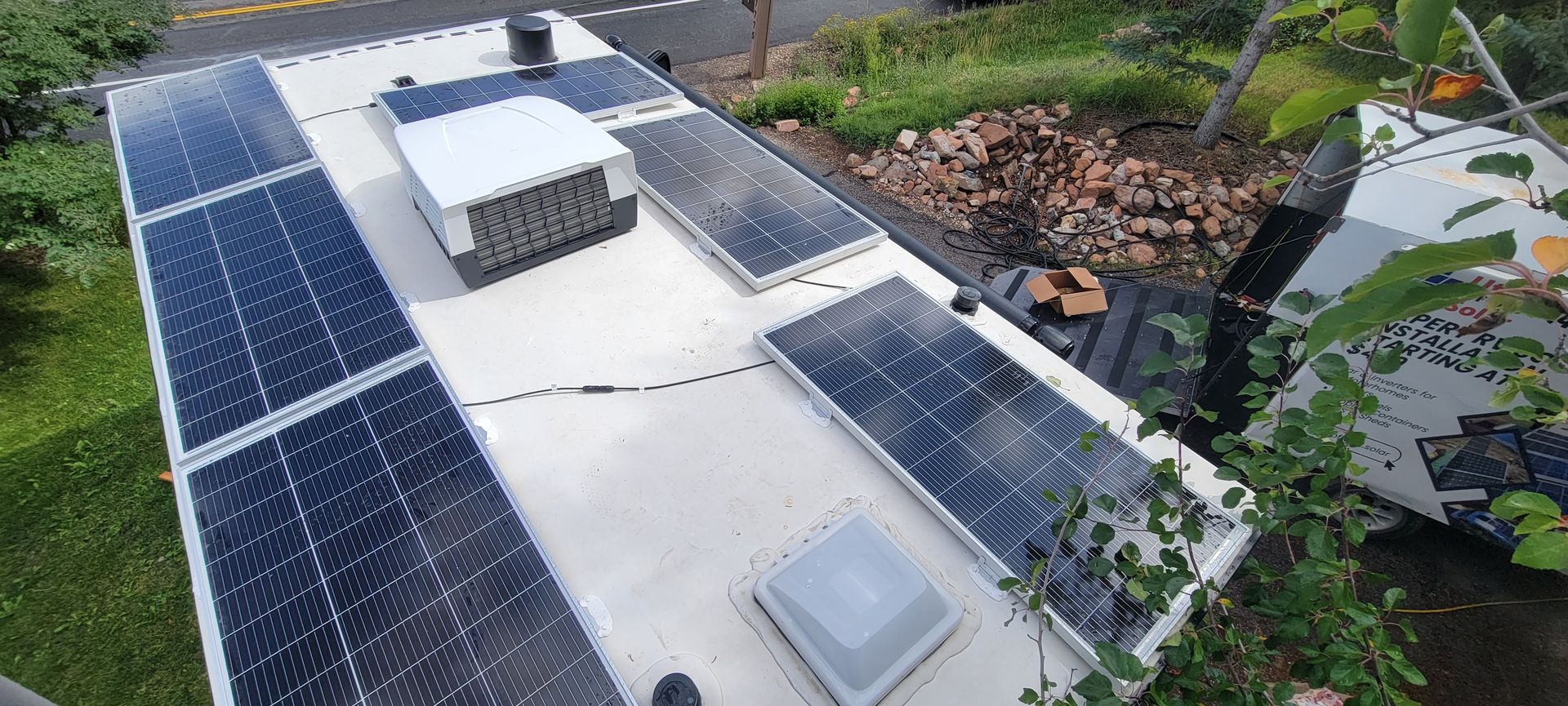
The next consideration is how much charging capability your system needs. For true off-grid living, the amount of energy you put back into your batteries each day must equal or exceed the amount you use in order to keep your batteries charged and prepared for cloudy days. Let’s assume your batteries are charged only with solar power. If you have a 1,000W solar system, how much energy can you expect to generate in a day? Most panels produce near their rated output for about four to six hours on a sunny summer day. Cloud cover, shading, and other factors can reduce this significantly. For our calculations, we’ll use the conservative estimate of four hours. A 1,000W system producing power for four hours would generate 4,000Wh in a day, which is then stored in your batteries.
How long could you run your air conditioner using only the energy collected that day? Again, we divide 4,000Wh by 1,500W, which gives us 2.6 hours. Based on this, it would be reasonable to plan on using the air conditioner for not more than 2.2 hours per day when relying on solar alone, weather dependent.
There are other factors to consider as well. Some systems include chargers that pull power from the vehicle’s alternator while driving. If your RV lifestyle includes frequent driving, this charging time can be factored into your daily energy input. For example, if you have a 12V charger that provides 50 amps while driving, you can add roughly 600Wh of energy for every hour driven. You may also have a generator onboard or available. If so, its charging contribution can be calculated and added to your system’s overall charging capacity.
When choosing to live off grid, many people will tell you that you must say goodbye to air conditioning, hair dryers, microwaves, tea kettles, and other creature comforts. That simply isn’t the case. If you take the time to consider the energy coming in, the size of your battery bank, and the energy going out, you can achieve almost any lifestyle you desire. When energy coming in meets or exceeds energy going out, off-grid RV living becomes predictable, comfortable, and sustainable.
Get Your Off-Grid RV System Built for Your Lifestyle
If you’re ready to take the next step toward a fully customized off-grid RV system, we can help you design and install it from start to finish. At Momentum Upfitters, we handle everything from solar panel installation and battery bank sizing to inverters, charging systems, and complete internal RV layouts. Our goal is to make sure your RV powers everything you need—air conditioning, appliances, and connectivity—without compromise. Contact us today to discuss your lifestyle, and let’s build a system that keeps you comfortable, on the move, and fully independent wherever the road takes you.
View our complete RV Power Packages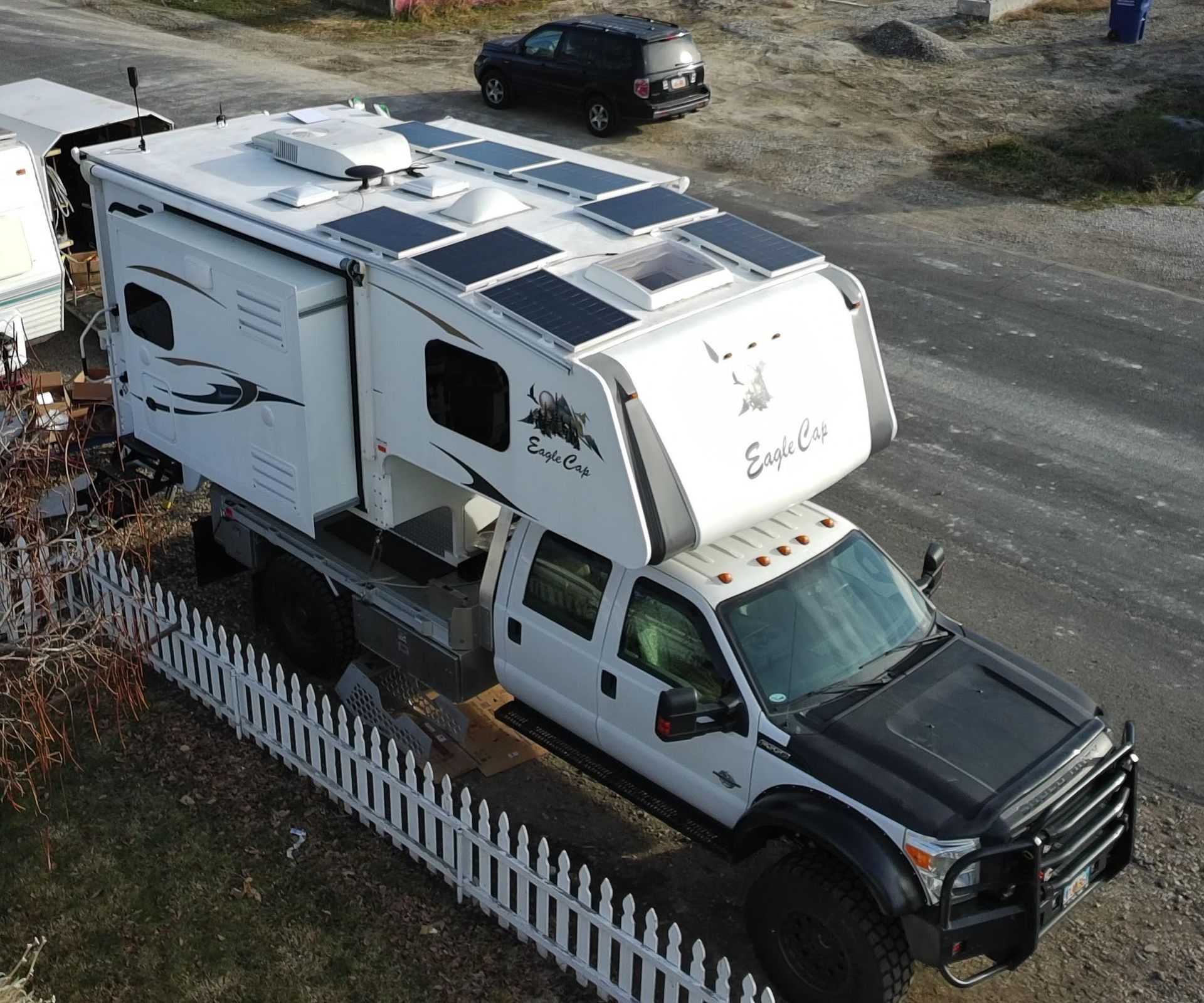
Article By Tyler Wyatt,
Momentum Upfitters - Fort Collins, CO