Many new RVs are sold as "solar prep," "solar ready" or "pre-wired for solar." That sounds like a big head start. Sometimes it is. Often it's a few wires and a connector.
Solar prep means the factory ran wiring for you to add solar later. It does not mean the RV has solar panels, and it often does not include a charge controller. Knowing what you actually have makes it easier to plan, and easier to avoid parts that cause trouble down the road.
There are two kinds of solar prep. Some RVs have one, some have both.
Rooftop Solar Prep
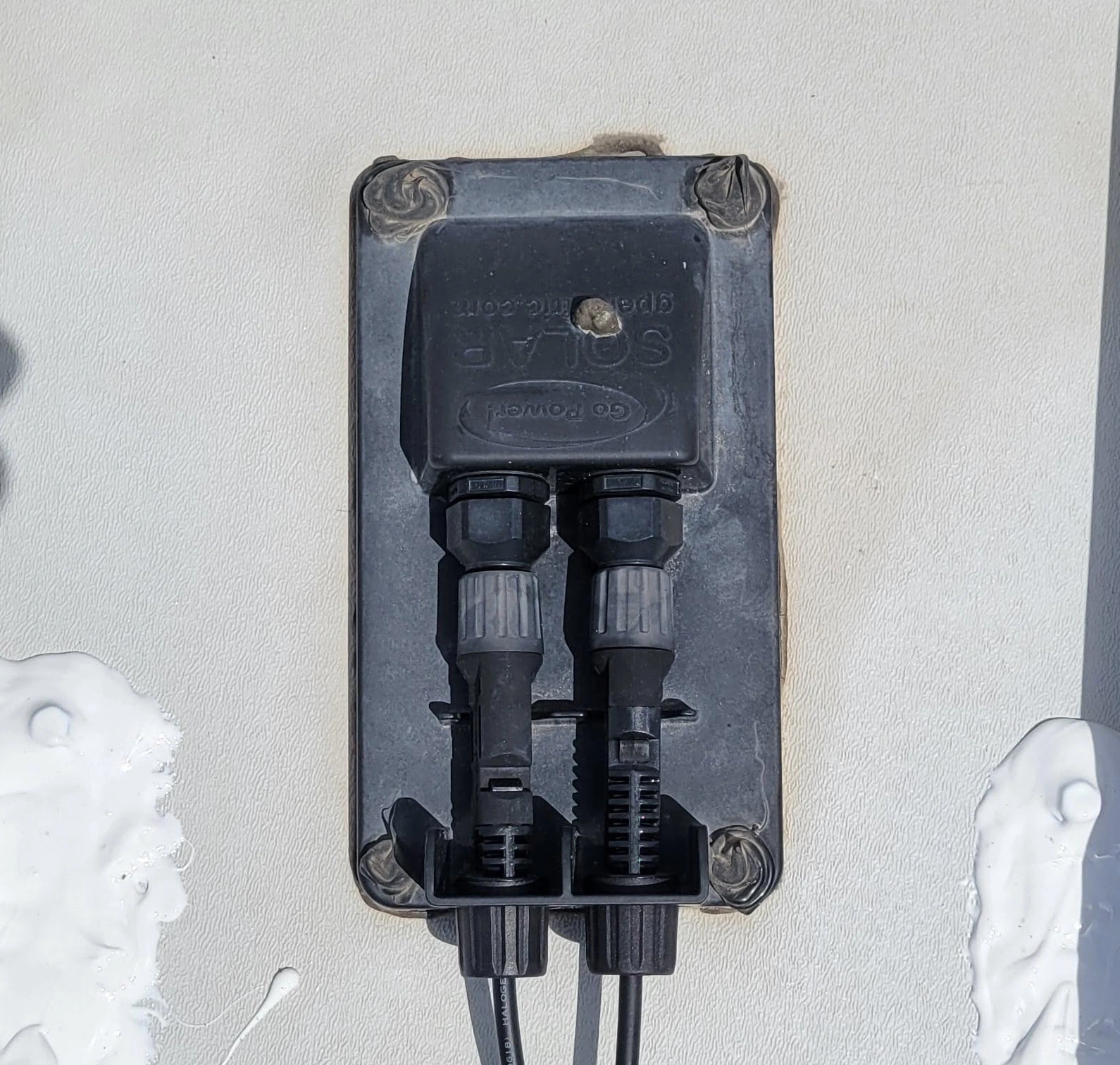
Rooftop prep is for panels mounted on the roof. It usually includes:
- A roof entry port. A small cap or box on the roof, often near the front or the fridge vent, with connectors for the panel leads.
- Wire from the roof to inside the RV. Usually 10 or 8 gauge, run down to a spot where a charge controller is meant to go.
- A controller location. Often a sticker on a wall in the entry step, a cabinet or a storage bay. The wires may be cut and capped behind it.
- Sometimes a small controller. Some motorhomes come with a basic 10 amp PWM controller already mounted.
Rooftop prep is the more useful of the two. The hard part of a roof install is getting wire through the roof and walls cleanly, and the factory has done that.
What to watch for:
- Wire size. Factory wire is sized for one or two small panels. A larger array may need heavier wire or a new run.
- Controller location. The factory spot is often far from the batteries. The controller works best close to the batteries, so we often move it.
- The included controller. A 10 amp PWM controller limits you to a small amount of solar. Most upgrades replace it with an MPPT controller, like a Victron SmartSolar.
- The roof connector itself. This is where Furrion and Zamp prep cause problems. More on that below.
Portable Solar Prep (Side Port)
Portable prep is for panels you set on the ground, like a folding suitcase panel. It's a plug on the outside wall of the RV, often near the front or the battery box.
The most common type is a 2-pin SAE port. Many are wired straight to the battery with no charge controller in between.
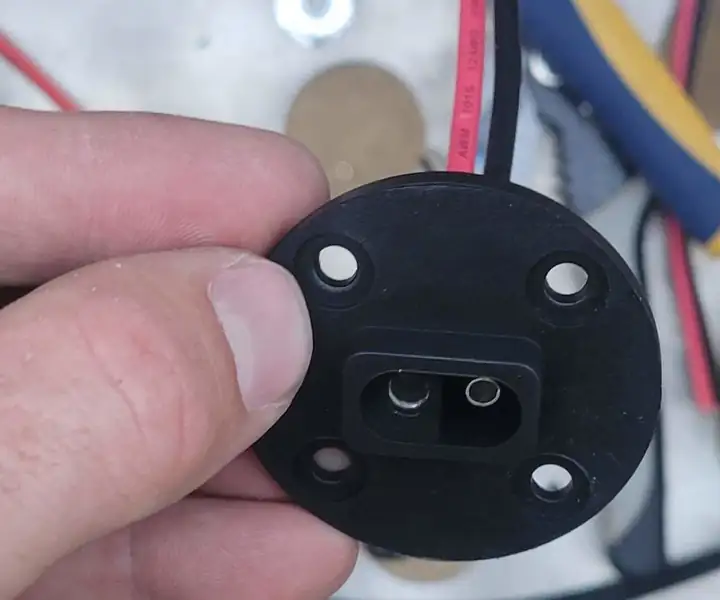
An SAE side wall solar port. Its 2-pin plug usually will require an adapter to connect to portable panels.
What to watch for:
- You may need a controller on the panel. If the port goes straight to the battery with no charge controller in-between, your portable panel needs its own built-in controller. Plugging a bare panel into a port with no controller can overcharge your batteries.
- Polarity. Zamp wires its SAE ports with the opposite polarity from most other SAE panels. Unfortunately due to the popularity of Zamp prep packages on many manufacturers, the SAE standard is effectively useless. Always double-check polarity on both the panel and RV side.
- Small capacity. These ports and their wiring are made for one small panel, roughly 100 to 200 watts. They are not a path to a large system.
A side port is handy for parking in the shade and moving the panel into the sun. It works best as an add-on to roof solar, not a replacement for it.
Furrion Rooftop Solar Prep: We Recommend Replacing It
For a few model years, many RVs left the factory with Furrion solar prep. It used Furrion's own connectors on the roof port.
The roof connectors look a lot like MC4, the standard plug on nearly every solar panel. They are not the same. Standard MC4 plugs don't mate with the Furrion roof box, so most panels can't plug in without an adapter. Furrion's newer rooftop box has since moved to standard MC4 connectors.
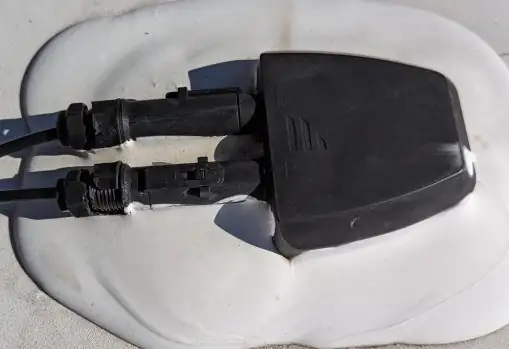
A factory Furrion roof entry. The plugs look like MC4, but standard MC4 panels won't connect.
The problems we see with the older Furrion setup:
- Adapters everywhere. Any non-Furrion panel needs an expensive and hard-to-find adapter, and every adapter is one more connection that can loosen or fail.
- Hard-to-find parts. When a connector breaks, a matching replacement can be hard to get.
- Limited expansion. The single-port roof box doesn't make it easy to add panels.
Our recommendation: replace the Furrion roof box with a sealed entry using standard MC4 connectors, or with a combiner box. Then any quality panel plugs in, and future upgrades are simple.
Zamp Rooftop Prep: The Worst Solar Prep We See
Zamp is one of the most common solar prep brands. Many RVs carry a "Zamp Solar Ready" sticker and a Zamp roof cap with one or three ports.
We'll be direct. The Zamp roof cap is the worst piece of solar prep we see, and we replace every one we find.
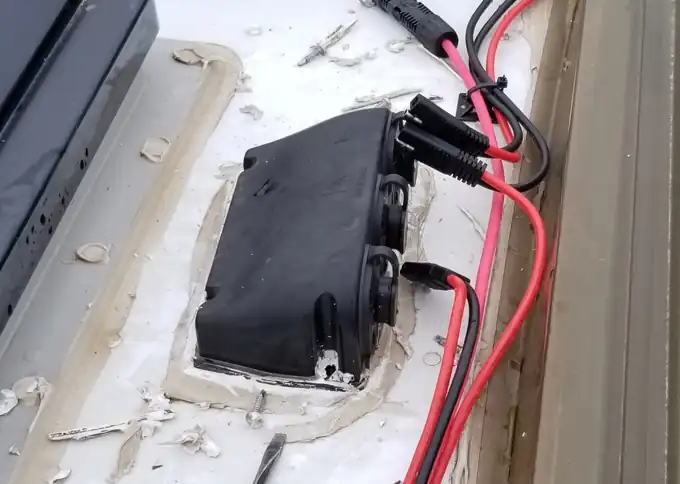
A Zamp three-port roof cap coming off a customer's RV. Note the open SAE plugs and the damaged housing.
The problem is simple. Zamp roof caps use 2-pin SAE plugs. SAE is a cheap, unsealed connector, basically a 2-pin version of a trailer light plug.
To be fair, SAE is fine for occasional use. Plugging a portable panel into a side port for a weekend, then unplugging it and capping the port, is exactly what it's good at. A permanent rooftop connection is the opposite job, and SAE has no business there.
Think about where this plug lives:
- It's on the roof. It takes direct sun, rain, snow, ice and road spray for the life of the RV.
- It's plugged in all the time. This isn't a plug you connect for a weekend and put away. It carries solar current every day for years.
- The contacts are open to the weather. There's no seal. Water gets into the plug, sits on the powered metal contacts and stays there.
Put those three together and failure isn't a risk. It's the expected outcome. A cheap connector made for occasional use was put in the harshest spot on the RV and asked to work nonstop. We're honestly surprised it was ever approved for this job.
What we find when we pull these caps:
- Corroded pins. Green and white buildup on the contacts. Corrosion adds resistance, which cuts solar output and creates heat right at the roof.
- Cracked, sun-baked plastic. UV breaks the housing down, and pins bend or snap.
- Loose or unplugged leads. We regularly find panel plugs that have worked partway out, or fallen out and are lying on the roof.
- Low current limits. SAE plugs are rated for far less current than MC4. Even when they work, they hold back your system.
- Reversed polarity. Zamp wires its SAE ports backward from the usual standard, which causes trouble with other brands of panels.
Many owners have no idea their solar quit working. The panels look fine from the ground. The failed connection is hidden on the roof.
Our recommendation: if your RV has a Zamp roof cap, replace it. We swap it for a sealed entry with MC4 connectors or a combiner box. MC4 connectors are weatherproof and built for outdoor solar use. It's a small part of the job, and it fixes the most common failure point we see in factory solar.
Don't Have Solar Prep?
That's fine. Solar prep saves some time, but it isn't required. We run new wiring through the roof on RVs with no prep all the time, and on many RVs we end up replacing the factory prep wiring anyway to handle a larger system.
Ready to Add Solar?
We install RV solar at our Salt Lake City shop and across Northern Colorado. We check your existing prep, keep what's good and replace what isn't.
- Solar-only upgrades, about $1,800 and up. Add solar and keep your current batteries. See solar-only upgrades
- Complete RV Power Packages, $6,999 to $24,999. Solar, lithium and a Victron inverter, installed. Compare packages
New to RV solar? Start with our Basics of RV Solar guide. Have an inverter prep box too? See What Is an Inverter-Prepped RV?
FAQ
Does solar prep mean my RV has solar?
No. It means wiring and a connector are in place. You still need panels, and often a charge controller.
Can I plug any panel into my roof solar port?
Only if the port uses standard MC4 connectors. Furrion and Zamp roof ports need adapters or replacement.
Can I plug a portable panel into my side port?
Usually, yes. Check whether the port has a controller behind it, and check polarity if it's a Zamp port.
Should I keep my Zamp roof port?
No. The SAE connector is unsealed, stays plugged in on the roof year-round, and corrodes. We replace every one we find, and we recommend doing it before you add or upgrade solar.
Should I keep the factory 10 amp controller?
For more than a small panel, no. An MPPT controller sized for your array charges faster and handles lithium batteries properly.